If you've recently been told you need a deep cleaning and you're not quite sure what to make of it, that's a completely normal place to be. Most people walk into what feels like a routine visit and walk out with a recommendation they weren't expecting, for a procedure they've never heard of, that sounds more involved than what they came in for. A deep cleaning, clinically called scaling and root planing, is a specific treatment for gum disease that has progressed below the gumline. It's not an upgraded version of a regular cleaning, and it's not something a dentist recommends casually. When bacteria settle onto the root surfaces of your teeth in spaces no toothbrush or polish can reach, a standard cleaning simply isn't built to address that.
The recommendation comes from measurable findings, pocket depth readings and bone levels on your X-rays, and it means the disease is already active. Because gum disease is almost entirely painless in its early and middle stages, feeling fine doesn't tell you much about what's happening underneath. This guide walks through what the procedure actually involves, why it's recommended, and what to expect so you can make a decision you feel good about.
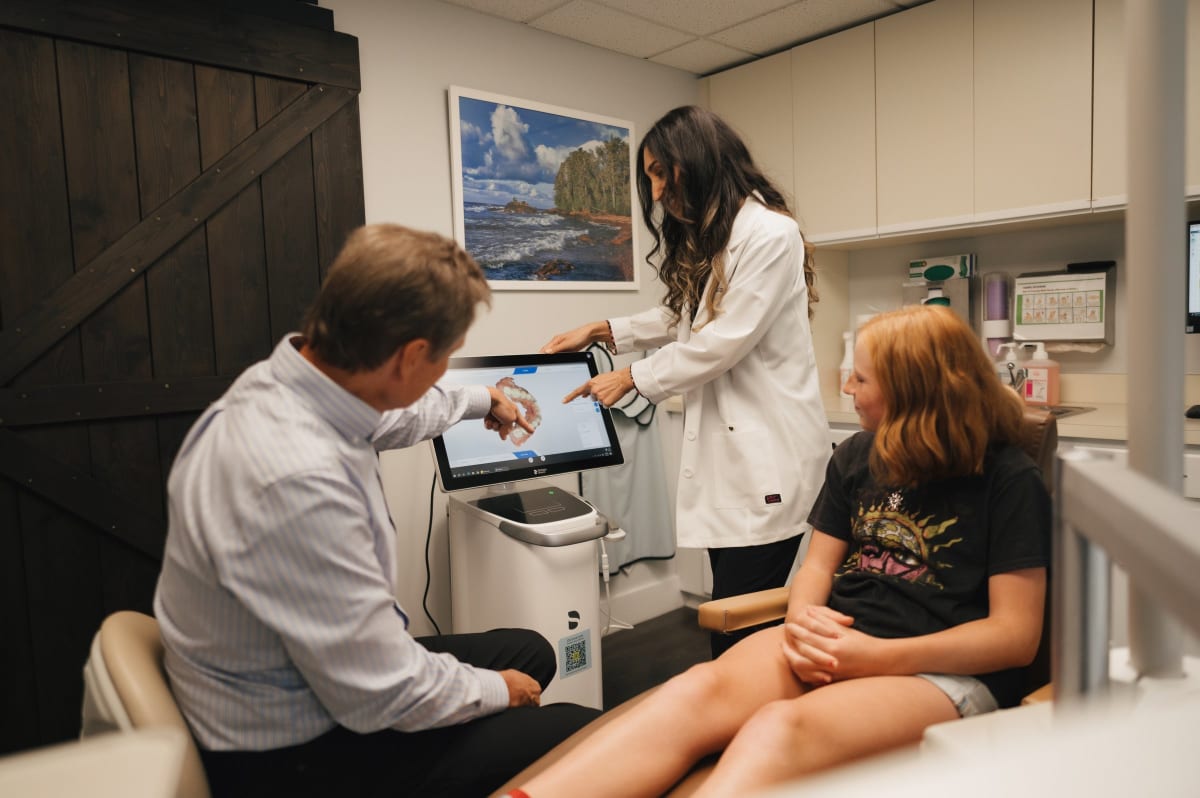
At Whole Dental Wellness, Dr. Tattan and our team walk through this with patients at our Birmingham and Roseville offices regularly. You'll see your own X-rays and pocket measurements on the screen beside you, and there won't be any pressure or judgment, just a clear picture of what we're seeing and what your options are. If you'd like to talk it through before committing to anything, give us a call at (586) 301-5759 (Roseville) or (248) 518-0606 (Birmingham).
What to know first
- A deep cleaning (scaling and root planing) works below the gumline. A routine cleaning works at and above it. Same word, different procedures.
- It's recommended based on two objective findings: pocket depth measurements taken during your exam and bone levels visible on your X-rays. You can ask to see both.
- Gum disease is usually painless until it's advanced, so "nothing hurts" tells you very little about what's happening under the gums.
- The appointment is done with local anesthetic and is often split into halves or quadrants. Mild soreness for a few days afterward is normal.
- Periodontal maintenance visits every three to four months protect the results, and our Perio Plan bundles four maintenance visits plus exams and X-rays for $669 a year.
Why a regular cleaning can't do this job
The most common reaction is fair: "But I already get my teeth cleaned." Both procedures are called cleanings, so it's reasonable to assume one is a deluxe version of the other. They solve different problems.
A routine prophylaxis cleaning removes plaque and hardened tartar from the visible tooth surface and right at the gumline. It polishes, it freshens, it keeps a healthy mouth healthy. Its boundary is the gumline itself.
Around every tooth sits a shallow groove between the tooth and the gum tissue, called the periodontal pocket. In a healthy mouth that pocket measures a couple of millimeters and stays easy to keep clean. When gum disease sets in, the pocket deepens, and bacteria migrate down into it and attach to the root surface underneath. Once they've settled there, three things stop working:
- Your toothbrush stops working, no matter how good your technique; bristles don't travel below the gumline.
- Floss stops working; it cleans the contact between teeth but can't reach into a deepened pocket.
- A routine cleaning stops working; it's designed for surfaces you can see and reach.
Scaling and root planing is built for that space. Scaling clears bacterial deposits and calcified tartar off the root surface below the gumline. Root planing smooths that root so the gum tissue has a clean surface to reattach to and bacteria have less texture to grip. It's slower, more detailed work than a polish, and that's the point.
How gum disease gets this far without hurting
Pain is a decent alarm system for a cracked tooth or an abscess. For gum disease it's close to useless, because most of the damage happens before you feel a thing.
The sequence is consistent. Bacterial plaque forms every day. Whatever isn't cleared away mineralizes into tartar, a hard deposit no toothbrush can budge. Tartar sits at and just under the gumline and irritates the tissue, so the gums inflame and pull slightly away from the tooth. That creates a deeper pocket, a sheltered space where more bacteria collect even further from anything you can clean at home. From there the infection works downward into the bone and connective tissue that anchor your teeth.
Gingivitis, the earliest stage, is nearly always painless, and so is a good stretch of the progression into periodontitis. By the time a tooth feels loose, the process has usually been running for months or years.
The signals show up long before the pain does:
- Gums that bleed when you brush or floss, even a little. Healthy gums don't bleed.
- Tissue that looks puffy, red, or has pulled back from the tooth so more of it shows.
- Bad breath that keeps returning no matter how well you brush.
- Teeth that feel slightly loose, or that have shifted or spread apart.
None of that is dramatic, which is why it so often gets written off as brushing too hard or just the way your gums are. The important thing to understand is that catching gum disease at the gingivitis stage means a much simpler path forward than catching it after bone has already been lost. The earlier it's identified, the more options you have.
What we're actually seeing when we recommend one
A deep cleaning recommendation isn't a verdict on your flossing habits. It comes from two measurable findings, both of which you can look at yourself.
Periodontal probing depths
During your exam, a small marked instrument gently measures the space between your gum and each tooth, at several points around every tooth. Shallow, consistent readings mean the tissue is attached and healthy. Deeper readings mean that attachment has broken down and bacteria are living somewhere no toothbrush or polish will reach. Ask what yours are; the pattern across your mouth tells the story faster than any explanation we could give.
Bone levels on your X-rays
Periodontal disease erodes the bone supporting your tooth roots, and that loss shows up on a digital X-ray long before you'd feel anything. When deep pockets and visible bone loss appear together, the disease is present and active, and a preventive cleaning is the wrong tool for it. Our periodontal team, led by Dr. Tattan, reviews these findings with you directly.
Why we show you both
We put the images and the numbers on the screen next to you and walk through them together. A recommendation you can see for yourself is easier to trust, and it gives you something concrete to compare against at your next visit.
What the appointment is like, start to finish
For most people the unknown is the hardest part, so here's the walkthrough.
1. Getting numb
Because the work happens below the gumline on sensitive root surfaces, we numb the area with local anesthetic. Once it takes hold, most people are surprised by how little they feel. If dental anxiety is a genuine factor for you, sedation options are available, and it's best to raise that before we schedule rather than on the day of.
2. Working in sections
We usually treat the mouth in halves or quadrants so the anesthetic stays targeted and you're not numb from ear to ear for an afternoon. You'll know the plan before we start, including how many appointments it will take.
3. Scaling
Hand instruments and ultrasonic tools remove hardened deposits from the tooth and down the root surface below the gumline. This is the part that takes time. It's methodical, tooth by tooth, and rushing it defeats the purpose.
4. Root planing
The root surface itself is then smoothed so bacteria have less to cling to and the gum tissue can reattach cleanly. Plan for longer chair time than a routine cleaning, and bring headphones if music helps you settle in.
5. The days afterward
Tenderness and some cold sensitivity around the treated areas are expected while your gums heal, and it usually settles within a few days. Stick to softer foods while you're tender, keep brushing gently rather than avoiding the area, and rinse as directed. If anything feels worse instead of better after a few days, reach out to our team rather than waiting it out. We would rather hear from you early than have you tough it out at home.
Why we treat gum disease as a whole-body issue

Untreated gum disease is a chronic bacterial infection sitting in your gum tissue, and your body answers it with inflammation. When the infection never resolves, that inflammatory response never switches off either. It becomes a low-grade load your body carries every day.
Peer-reviewed research has documented associations between periodontal disease and systemic conditions, particularly cardiovascular disease and diabetes. With diabetes, the relationship runs in both directions. Elevated blood sugar makes gum infections harder to control, and an active gum infection makes blood sugar harder to manage. These remain associations rather than proven cause and effect, but they're consistent enough that we treat periodontal disease as a health condition rather than a cosmetic inconvenience.
So a deep cleaning isn't only about keeping your teeth where they belong. It's about shutting down a source of chronic infection your body has been quietly fighting. If you already pay attention to sleep, nutrition, and stress, your gums belong in that conversation. That's why Dr. Tattan and our periodontal team approach gum disease as a whole-health issue, not just a dental one.
What keeps the results after the cleaning
Scaling and root planing resolves the infection that's there now. What happens over the following year decides whether it stays resolved.
Once your tissue has healed, you'll come back for a periodontal maintenance visit, typically every three to four months rather than twice a year. We're re-measuring pocket depths, checking whether the tissue reattached where we expected, catching any spot that's regressing, and keeping the bacterial load low enough that your gums can hold their ground.
This procedure treats active disease, it doesn't make you immune to it. Gum disease returns when the conditions that produced it return. Daily home care and consistent professional monitoring protect the work you've already paid for.
Our Perio Plan covers four maintenance visits plus exams and X-rays for $669 a year, a savings of $558 compared with paying visit by visit, with no deductible, no annual maximum, and no pre-approvals to wait on. Your specific treatment cost depends on how much of your mouth is involved, and you'll see the numbers before you commit to anything.
Frequently asked questions about deep cleanings
Does a deep cleaning hurt?
The procedure itself is done under local anesthetic, so what most people want to know is what the following days feel like. Day one, expect tenderness in the treated areas and some sensitivity to cold.
By day two or three, brushing gently along the gumline should feel less sharp, and by the end of the first week most people are back to eating and brushing normally. If soreness is climbing instead of easing after a few days, let us know rather than waiting it out.
How many appointments will I need?
One or two, depending on how much of your mouth is involved, since we treat it in halves or quadrants. Budget about 60 to 90 minutes per visit, which is longer than a routine cleaning, and we'll confirm your schedule before any work starts.
Can I just get a regular cleaning instead?
When measurements show active disease, a routine cleaning isn't the same service at a lower price; it's a different procedure that treats a different problem, and insurance codes it that way too. Deferring doesn't hold your place either. Bone that erodes while you wait doesn't come back, so the mouth we treat six months or two years from now is harder to stabilize than the mouth in front of us today. If cost is the holdup, ask us about our membership plan, which includes a periodontal option built around maintenance visits, exams, and X-rays for one flat annual fee.
Will my gums grow back?
Gum tissue can tighten and reattach as inflammation resolves, and pocket depths often improve measurably. Bone that's already been lost doesn't regenerate on its own, which is the strongest argument for treating gum disease sooner rather than later.
What if it's been years since my last visit?
Then you're in very good company. We'll look at where things stand today and go from there, with no commentary on the gap.
If a deep cleaning has been recommended, let's talk it through

Hearing that you need one when you walked in feeling fine is disorienting. Whether you're ready to schedule, sitting on a recommendation from another office, or you'd just like a clear read on your gum health, we're happy to look and explain exactly what we see.
Call our Roseville office at (586) 301-5759 or our Birmingham office at (248) 518-0606 to get on the schedule.
We Can't Wait To Meet You!
Call or Book An Appointment online to set up your first visit. We’ll be in touch soon.
Our Core Values
Trust or Bust
We build strong relationships through honesty and accountability.
Everyday We're Hustlin'
We embrace a strong work ethic and dedication to excellence.
Teamwork Makes the Dream Work
Together, we achieve greatness.
Own It
We take responsibility and deliver results.
Funergetic
We bring fun and energy into the workplace, creating a positive environment for our team and patients.