Your Gums Can Be in Trouble Long Before Anything Hurts
If nothing hurts, why go in? For most of the body, that's decent logic. Pain is the alarm system. Gum disease breaks that rule completely: it can quietly damage the bone holding your teeth in place for months or years without causing any discomfort. By the time it hurts, the easy version of treatment is usually behind you.
Dr. Weiner and the team at Whole Dental Wellness have this conversation often with patients across Birmingham, Roseville, and the surrounding Oakland County and Metro Detroit communities. "It doesn't hurt" is the most common reason people delay a visit, and with gum disease it's the reasoning that costs the most.
If you'd like someone to take a look and tell you where you stand, call our Birmingham office at (248) 518-0606 or Roseville at (586) 301-5759.
What to know first
- Gum disease progresses without pain through its early and moderate stages. Feeling fine tells you very little about the health of your gums.
- The first stage, gingivitis, is reversible. The next stage, periodontitis, involves bone loss, and bone doesn't grow back on its own.
- Early warning signs are visual and easy to dismiss: bleeding when you brush, puffy gums, gums pulling back, breath that doesn't stay fresh.
- Chronic gum inflammation has been linked in peer-reviewed research to cardiovascular health, blood sugar control in diabetes, and pregnancy outcomes. This whole-body connection sits at the center of how we approach care.
- A periodontal evaluation is a diagnostic visit, not a commitment to treatment. You leave knowing exactly where your gum health stands.
How Gum Disease Moves From Harmless to Permanent
Understanding the mechanics makes the "but it doesn't hurt" problem click into place. Your body does warn you, just not through pain.
Stage one: bacteria settle in below the gumline
Your mouth hosts a huge community of microorganisms, most of them unremarkable. Trouble starts when plaque builds along and just under the gumline and isn't fully removed. That space is low in oxygen, exactly the environment certain bacteria prefer. They colonize, multiply, and your immune system notices.
Stage two: gingivitis, the reversible stage
Your immune response to those bacteria is inflammation, and short term that's your body doing its job. At this stage the inflammation stays in the soft tissue only. Gums look a little red, maybe puffy, and they bleed when you brush. Most people file this under "I brushed too hard."
Gingivitis is fully reversible. A thorough professional cleaning plus consistent home care can return the tissue to health with nothing lost. No bone, no gum, no teeth. This is the cheapest, simplest, least invasive moment in the entire arc of this disease, and also the moment with nothing that hurts enough, looks bad enough, or worries you enough to make anyone pick up the phone.
Stage three: periodontitis, where the damage becomes permanent
When the bacterial trigger never goes away, inflammation becomes chronic and reaches past the soft tissue into the structures that anchor your teeth: the connective fibers and the bone underneath. Your own immune response contributes to the breakdown. The body attacks the infection, and the surrounding architecture takes collateral damage.
As tissue detaches from the tooth, pockets form. Deeper pockets give bacteria a more protected place to live, which drives more inflammation, which deepens the pockets. It's a loop that feeds itself. Bone lost to that process does not regenerate on its own. This is the point where periodontal care shifts from prevention to management, and where Dr. Tattan's training in periodontics and implant dentistry comes into the conversation.
Stage four: the symptoms you'd actually notice
Loose teeth. Gums that clearly recede. Persistent soreness. Teeth that shift or no longer bite together the way they used to. These are the signals most people wait for, and every one arrives after significant structural loss has already happened. The disease starts at stage one, and the alarm doesn't ring until stage four.
The Early Signals Your Body Does Send
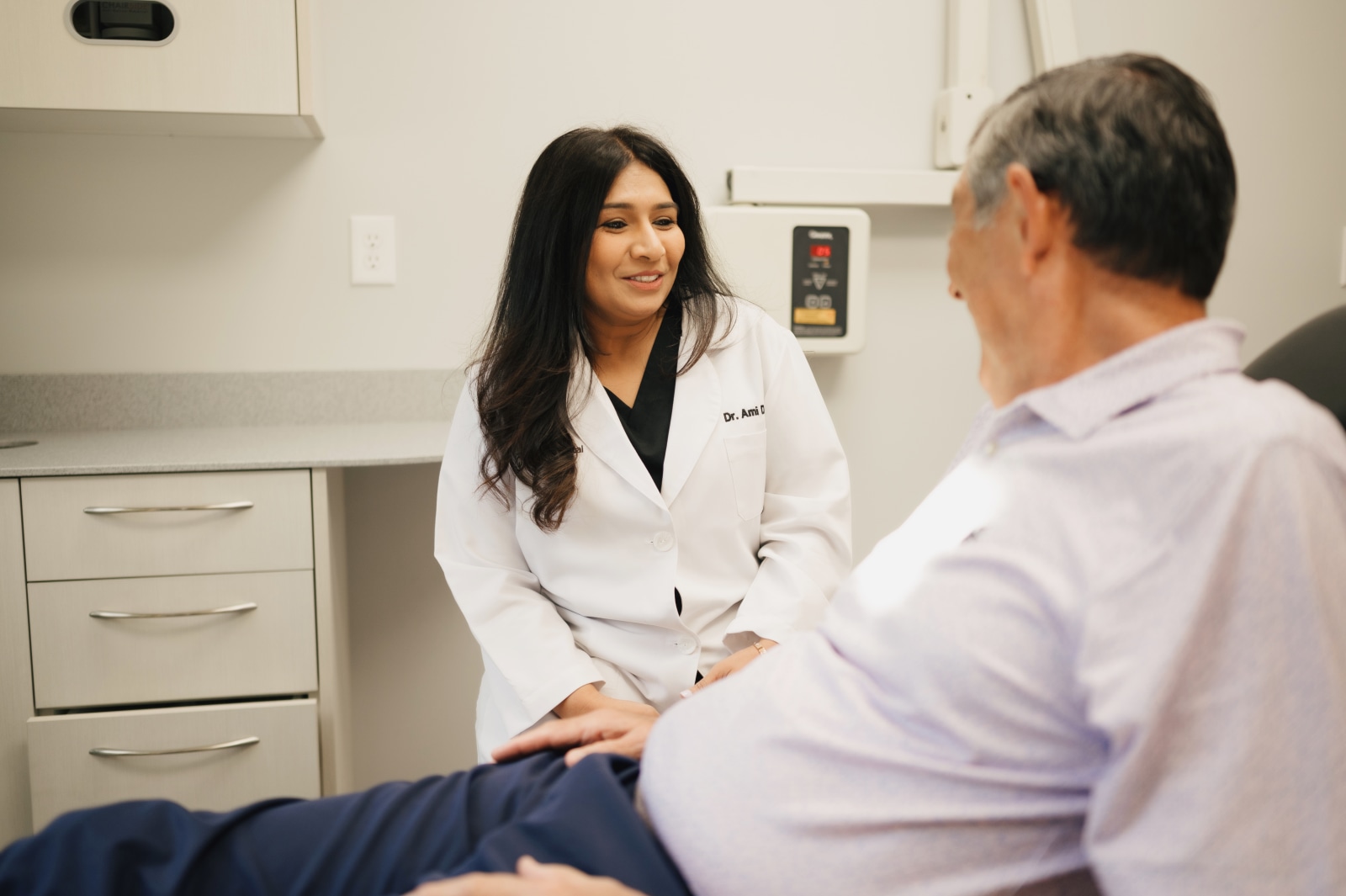
Your gums communicate, just not in the language most of us are listening for. These are worth mentioning at your next visit, even if you feel completely fine.
- Bleeding when you brush or floss. A little pink in the sink feels like nothing. But healthy gum tissue doesn't bleed from routine brushing, the same way healthy skin doesn't bleed when you towel off. Bleeding is inflammation, and inflammation this early is the most reversible. This is exactly the kind of thing a routine cleaning and exam is designed to catch.
- Gums that look puffy, shiny, or darker red than usual. Healthy tissue is firm and snug against the tooth. Swollen tissue is your immune system's response showing on the surface.
- Teeth that look longer than they used to. Recession is gradual enough to miss in the mirror. Old photos are sometimes more honest than memory.
- Breath that doesn't stay fresh after brushing. When it comes back within an hour, the source is usually bacterial activity below the gumline, not something you ate.
- Food packing in a spot it never used to. A gap opening between teeth often means the tissue or bone supporting them has changed shape. Our periodontal team can measure whether that support has actually shifted.
- A tooth that feels faintly different when you bite. Subtle mobility is easy to talk yourself out of, and one of the more meaningful things you can report.
None of these are emergencies, and noticing one doesn't mean you have advanced disease. Mention any of them at your next visit. They're much easier to say out loud than they are to notice on your own.
Why Waiting Costs More Than Money
Gum disease doesn't pause while you sort out your schedule. That separates it from dental issues you actually can safely postpone.
The treatment itself gets bigger
Caught in the inflammation stage, gum disease is generally managed with professional cleaning and better home habits. A step further, and it's scaling and root planing, a deeper cleaning that removes bacterial deposits from the root surfaces below the gumline. That isn't just a more aggressive polish; it addresses a different level of the problem, which is why a regular cleaning can't substitute for it. Further still and the conversation moves toward laser periodontal therapy, surgical options, grafting, or in advanced cases extraction and tooth replacement. Every step is a bigger commitment of time, money, and healing than the one before it.
The financial gap widens the longer you wait
Treating advanced periodontitis, replacing teeth that couldn't be saved, and managing ongoing maintenance costs meaningfully more than staying ahead of it. If you need regular periodontal maintenance, our Perio Plan is $669 a year and covers four maintenance visits plus exams and X-rays. Paying for that same year of care visit by visit runs $558 more.
There are no deductibles, no annual maximums, and no waiting for pre-approvals. If your gums are healthy and you're keeping them that way, the Adult Complete plan is $289 a year, less than half the cost of a year of periodontal maintenance once the disease has taken hold.
The disruption compounds
- More appointments to fit into an already crowded calendar
- Longer healing after more involved procedures
- Decisions made under pressure instead of at your own pace
- A treatment plan built around saving what's left rather than protecting what's healthy
The inflammation doesn't stay in your mouth
Gum disease is a persistent bacterial infection with an ongoing immune response attached to it, and your body doesn't file that away as a separate department. The relationship with diabetes runs in both directions: poorly controlled blood sugar makes gum disease harder to manage, and active gum disease makes blood sugar harder to control. If you're managing a chronic condition, your gums belong in that conversation.
What Actually Happens at a Periodontal Evaluation
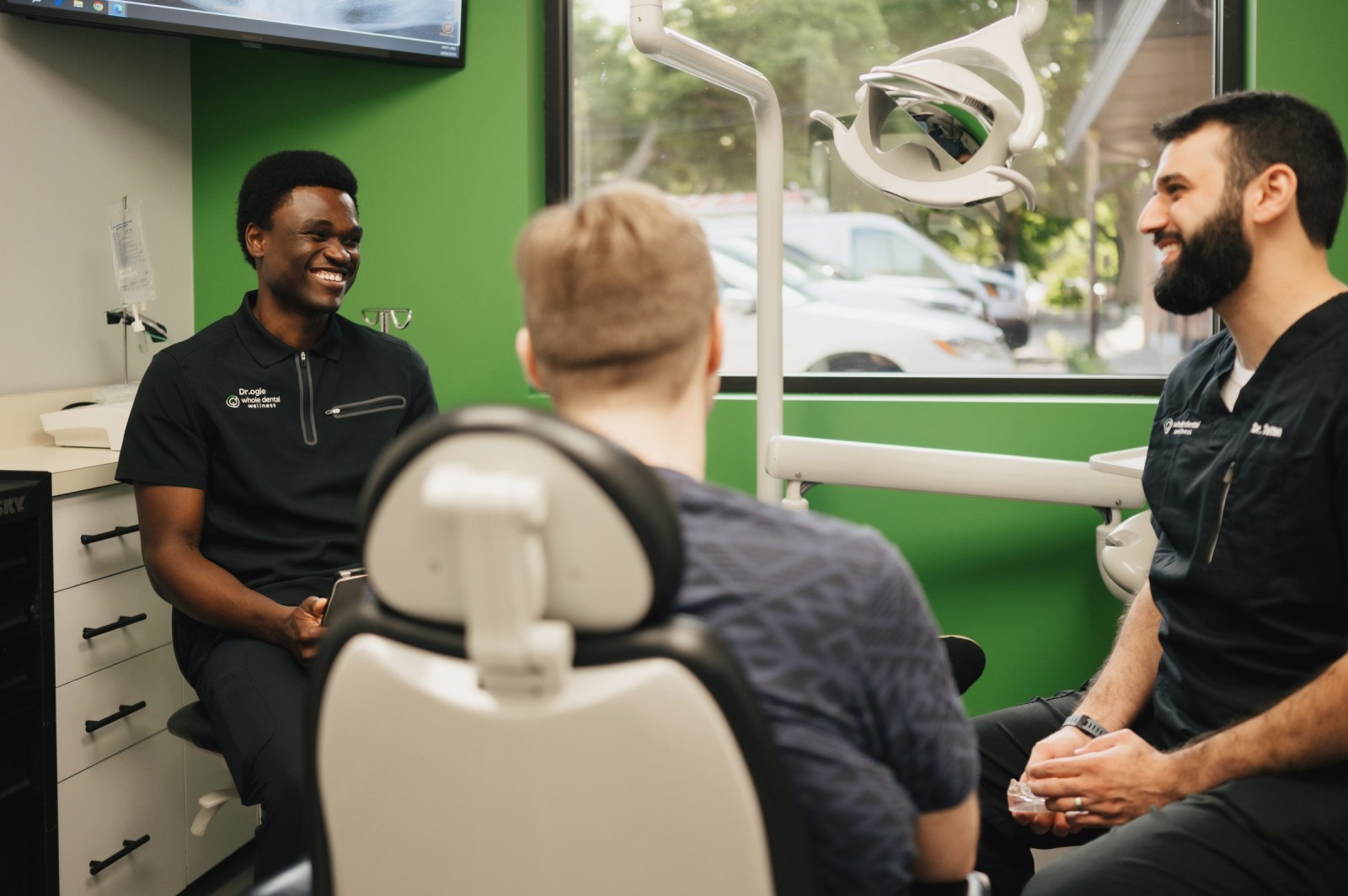
For many people the real barrier isn't the disease, it's not knowing what they're walking into. So here's the visit, plainly.
A periodontal evaluation is diagnostic. You're not signing up for treatment by showing up. A clinician measures the depth of the space between each tooth and the gum around it, in millimeters, at several points per tooth.
Those pocket depths tell us whether the tissue is still attached where it should be. We check for bleeding at those points, look at how much gum tissue has receded, and review digital X-rays to see the bone level under the gumline. Digital imaging uses noticeably less radiation than older film, which matters when you're getting images taken regularly over the years.
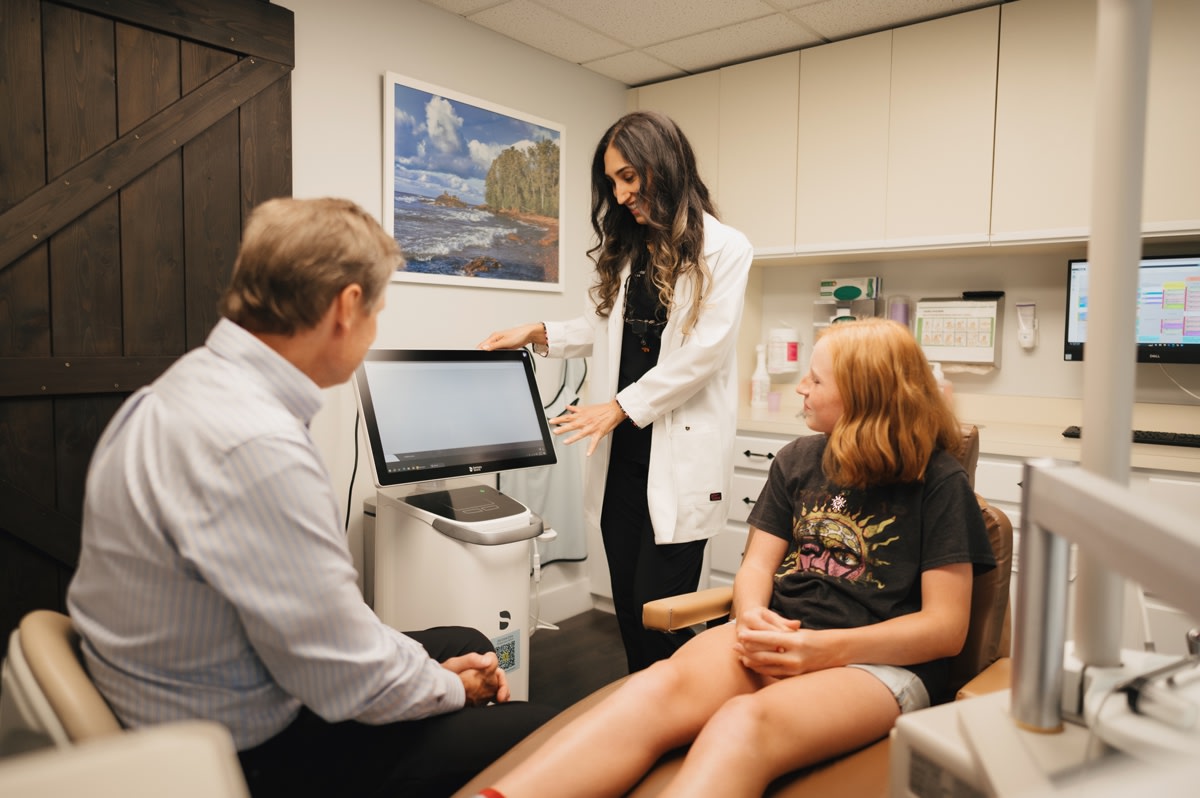
You'll see what we see. Intraoral camera images and your X-rays go up on the screen next to you, and we walk through them together rather than describing findings you can't verify. If your numbers are healthy, we'll tell you that and send you home. If there's early inflammation, the plan is usually straightforward. If there's more going on, you'll get an honest picture of the options, what each involves, and what it costs before anything gets scheduled.
"Feeling Fine" Is the Best Time to Come In Before Things Go Wrong
Waiting for a symptom is reasonable almost everywhere else in medicine. Your knee feels fine, you don't call an orthopedist. Gum disease is one of the narrow exceptions, because the alarm arrives after the part you'd most want to prevent has already happened.
So if nothing hurts, good. That likely means there's nothing to reverse yet, only something to protect. Come in while protecting is still the whole job. A routine preventive visit is where that protection starts, and if we do find early signs, our periodontal team can walk you through what's happening and what your options are.
To get your gum health checked or just ask a few questions first, call Birmingham at (248) 518-0606 or Roseville at (586) 301-5759. We'd be glad to hear from you.
We Can't Wait To Meet You!
Call or Book An Appointment online to set up your first visit. We’ll be in touch soon.
Our Core Values
Trust or Bust
We build strong relationships through honesty and accountability.
Everyday We're Hustlin'
We embrace a strong work ethic and dedication to excellence.
Teamwork Makes the Dream Work
Together, we achieve greatness.
Own It
We take responsibility and deliver results.
Funergetic
We bring fun and energy into the workplace, creating a positive environment for our team and patients.